Hopeful Homeless: Fighting homelessness through stories
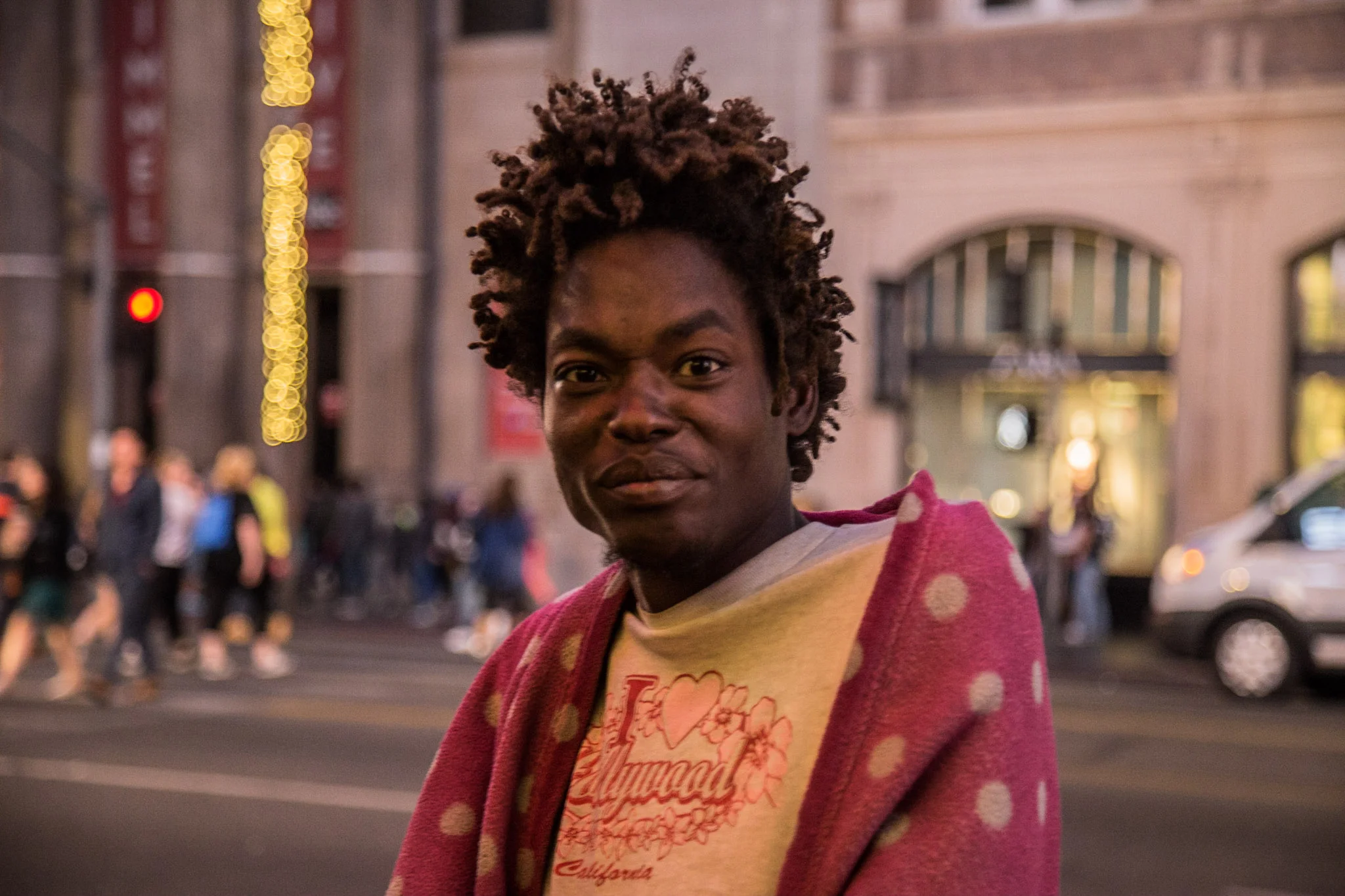
Tasha, a local artist living on the streets of Los Angeles, California
Welcome to a snippet of “Hopeful Homeless”, a project created by Noah Wali that shares stories and images of the houseless community to connect with the houseless population beyond surface-level interactions.
I interviewed houseless people, mainly in my home city of Portland, as well as in other cities. We discussed living conditions, the past, politics, and anything else on their minds. The end goal is a free-flowing photobook filled with stories and images. It is my firm belief that for change to happen globally or politically, we must first create human connections locally.
Story One: Tasha
It was a Tuesday afternoon on the bustling street of Hollywood Ave, however, there was someone in specific who quickly caught my eye. A bright-colored lady painting a beautiful picture of the busy road with a compelling sunset shadowing the famous Hollywood Ave.
Her name was Tasha, and she was 30 years old. She was a painter.
As I sat down beside her, I could tell she was nervous, uncomfortable. I tried my best to understand my positionality and biases, and tried to enter into our conversation free of judgement, with only open ears and the desire to understand.
She grew up just outside Los Angeles and dropped out of High School Junior year. Her family (2 other siblings and her mother) was surviving on their mother’s two jobs. For her 17th birthday, her mom got her a ticket to an “introduction to painting class”.
She went to the class and enjoyed herself so much that she saved up money from working her own job to buy supplies, and she painted daily.
Eventually, her mother passed away, and she lost touch with her two siblings after they moved away. She had lost the family’s house as well. She took a bus to Hollywood Avenue to mourn her mother’s death, and she has been living houseless near the area since age 19. She never stopped painting: she had the same supplies, and she would paint on cardboard boxes or on the sidewalk. She hides her pieces where she sleeps, but for about a year, she was too scared to publicly show her art or try to earn a living off of it. Her work focuses on bright colors and unique shapes.
I asked her about her opinions on public art as a whole, and she responded that freedom of art has been very important to her over the years, creating pieces that align with her stories and perspectives. She keeps up with the current news as much as possible. Some of her first pieces drawn in public were images of Trump with what she called “playful imagery” of his face.
Tasha believes that public art is meant to be offensive and to provoke emotion. “People be putting up different types of art that go against and go for Trump, and I say go for it. Public art should make people angry, happy, sad, and confused. Public art has to stir up controversy, you know? Art that is put on display for anyone to see is supposed to make you feel a certain way, and it should spark a debate. Public art can be powerful for people like me who don’t have say in much.”
Though our conversation was brief, it was an honor to learn about her. For my first interview in this project, I was happy with Tasha’s willingness to speak with me. Previous interactions had not gone this way. The experience also served as a moment of growth for me, putting myself out there and making a human connection with someone I may not usually cross paths with every day.